What Is a Budget and Why Does It Help?
Understanding how a budget works can help bring clarity, confidence, and less worry to your everyday finances. Let’s look at what a budget is, why it matters, and how to start using one in your own life.

Creating a budget is one of the most practical ways anyone can manage their money—whether you’re tracking paychecks, bills, or savings goals. This article explains budgets in everyday language, so you can start making a plan that works for you and your daily life.
What Exactly Is a Budget?
At its heart, a budget is simply a plan—one that maps out your expected income and expenses for a period of time, most often a month. Think of it as a tool that helps you understand what money will come in, what needs to go out, and what’s left for other priorities or saving.
Budgets are not about restriction or perfection. Instead, they give you a clearer picture of your financial life, so you can make choices that support your needs and goals.
Why Does a Budget Help?
- Clarity. A budget helps you see your finances in one place, making it easier to spot patterns and plan for what’s ahead.
- Confidence. Knowing where your money is going can reduce stress and empower you to make day-to-day decisions.
- Control. A budget gives you a sense of control, even if things are tight, by helping you prioritize needs, cover bills, and set aside for savings or debt.
- Flexibility. Budgets can change! The aim is progress, not perfection; you can adjust as needs or income shift.
Common Things a Budget Tracks
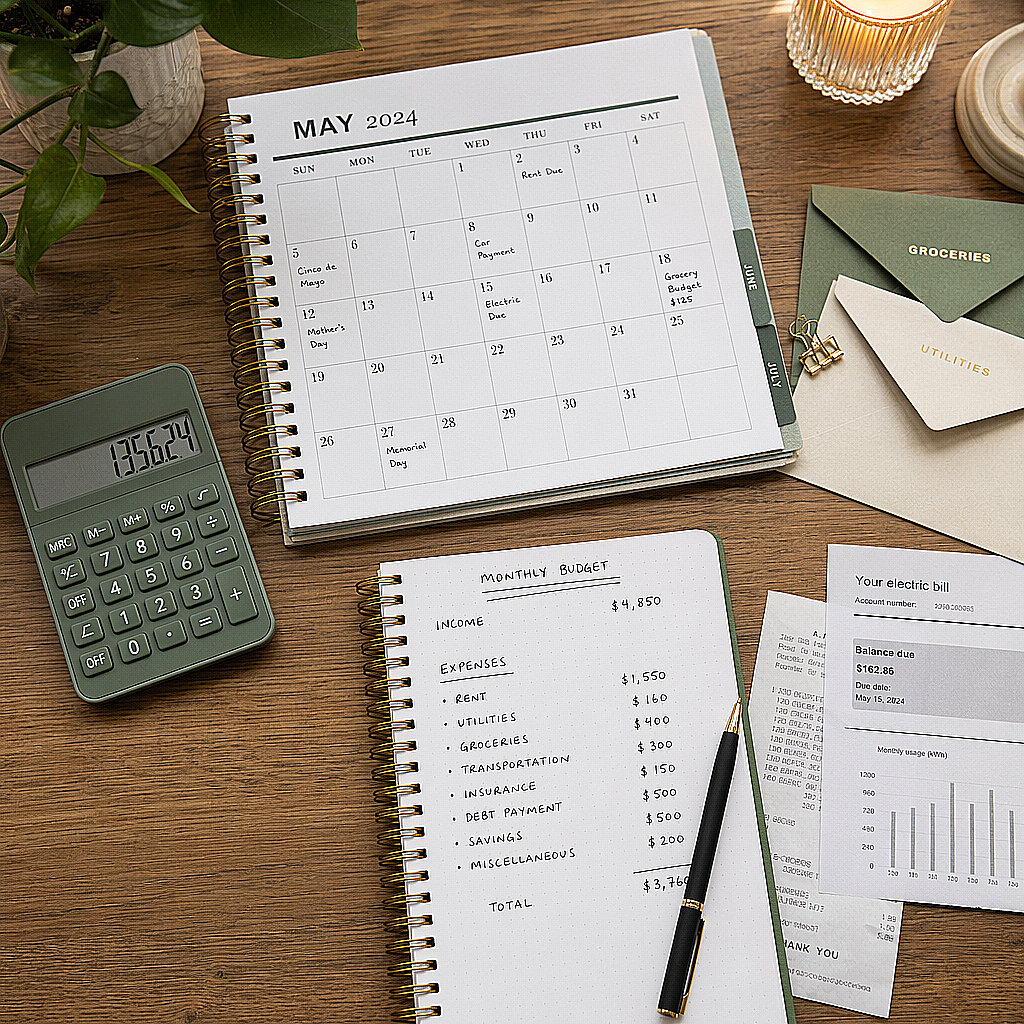
Income
Paychecks, social security, government benefits, side jobs, or any money coming in.Bills
Rent, utilities, phone, insurance—regular payments due each month.Groceries
Food and household supplies you shop for regularly.Transportation
Gas, public transit, car payments, and maintenance costs.Savings
Money set aside for future needs or emergencies, even if it’s small.Debt
Credit card balances, loans, and any money owed that is being repaid over time.Simple Ways to Start Budgeting
- Collect your info. Write down or open your bank app to list your income, bills, and main spending categories.
- Add up totals for each. See what you bring in, what must be paid out, and what you typically spend.
- Compare and plan. Notice where your income covers your expenses—or where you may need to adjust.
- Choose your method. Use paper, a notebook, a spreadsheet, or a budgeting app—whatever matches your style and feels realistic to keep up.
- Review and adjust monthly. Life changes! Give yourself grace and tweak your plan as the months go by.
Gentle Reminders as You Budget
- Budgets aren’t about cutting out all fun—just about knowing what’s possible for your priorities.
- Your first budget doesn’t need to be perfect. Start with your best guess and update as you learn.
- If your income is unpredictable, focus on tracking the basics and adjust as needed each month.
- Small steps count—review your plan regularly and celebrate progress along the way.
- If something doesn’t work, try a different system or ask someone you trust for tips.
Related Topics
This article is for general educational and informational purposes only. It is not financial, tax, legal, or investment advice, and it is not a substitute for personalized recommendations. Gran Financial LLC does not provide financial advisor, credit, tax, or legal services of any kind. Your financial situation is unique—always consider seeking advice from qualified professionals for decisions that affect you.
Keep Learning with Gran Financial LLC
Visit our educational resource library for guides, reminders, and approachable money concepts—no jargon, no sales, just clarity for your everyday finances.
Explore Resources