Budgeting Basics
Build confidence managing your money with practical, everyday budgeting basics—no jargon, just understanding.
What Does Budgeting Mean?
Budgeting is simply creating a plan for how you’ll use your money—from tracking what you have coming in (your income) to deciding where it will go each month. It’s not about restriction or perfection, but about giving yourself clarity on your needs, habits, and choices. A budget acts as your roadmap, helping you make mindful decisions, prepare for surprises, and move forward with confidence.
Why A Budget Helps
A budget turns uncertainty into clarity. It helps you stay on top of bills, find more room for savings, spot waste, and avoid surprises. With a simple plan, you can feel less overwhelmed by expenses, set realistic goals for the future, and make sure your spending lines up with what matters to you most.
- See where your money goes, all in one place
- Reduce stress by planning for bills and essentials
- Make space for saving or paying down debt
- Prepare for emergencies or unexpected costs
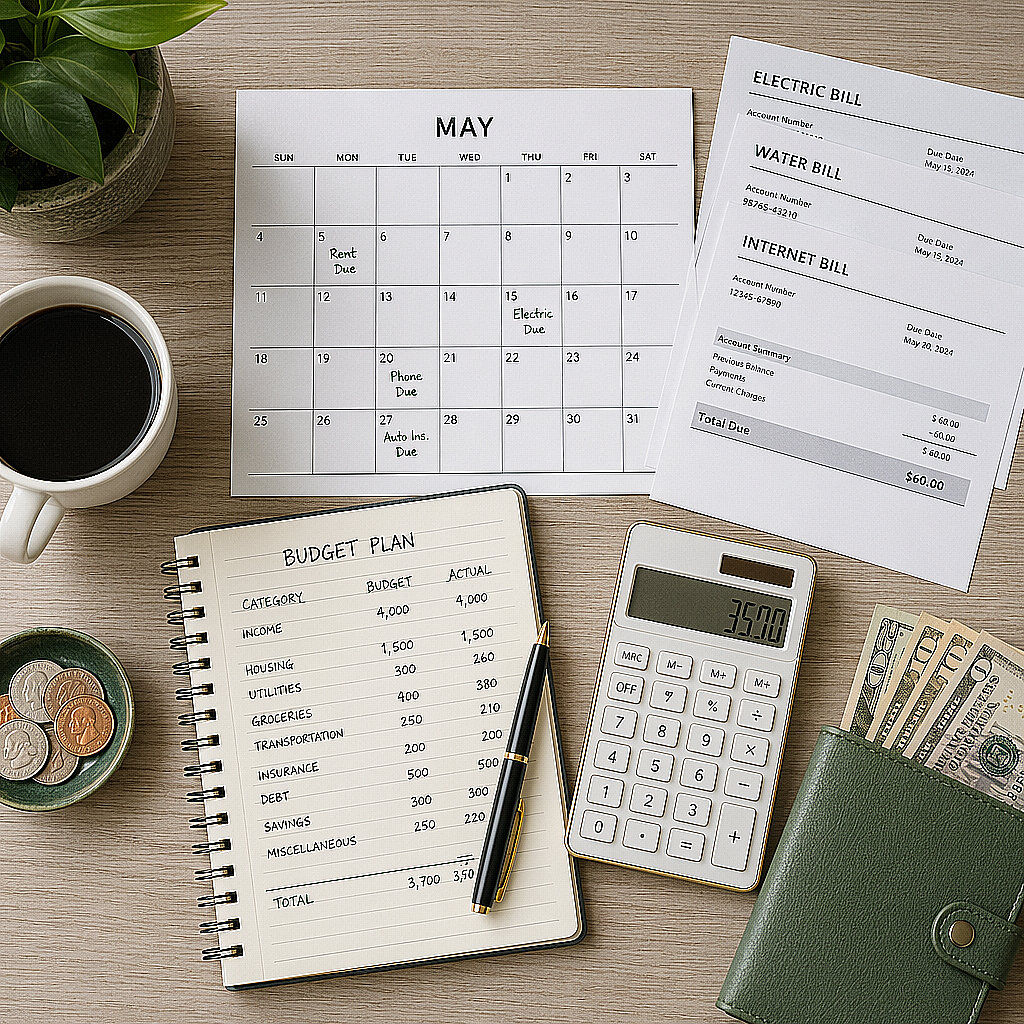
Common Budget Categories
Money you receive from work, benefits, or any source each month.
Housing, utilities, phone, insurance, and all regular payments due each month.
All food and household items purchased for your home.
Fuel, public transit, car payments, insurance, repairs, and related expenses.
Money set aside for goals, emergencies, or unexpected needs.
Payments made toward credit cards, loans, or other debt.
Unexpected costs like repairs, medical needs, or urgent family needs.
Simple Steps for Building a Budget
-
1
List Your Income
Write down all money you receive each month, such as paychecks, benefits, or other regular sources.
-
2
Track All Expenses
List your monthly bills, groceries, transportation, debt payments, and any other spending—including occasional or seasonal costs.
-
3
Compare Income and Expenses
Subtract total expenses from your income. If you’re over budget, adjust non-essentials until you reach balance.
-
4
Prioritize Savings and Needs
Set money aside first for needs and a bit for savings—however small—to help prepare for the unexpected.
-
5
Track Your Spending
Use a notebook, app, or worksheet to watch where each dollar goes throughout the month.
-
6
Review and Adjust Regularly
Budgets aren’t set in stone. Check in monthly, see what’s working, and adjust for life’s changes or new goals.
Budgeting Mistakes To Watch For
- Forgetting to include occasional or emergency expenses.
- Guessing spending amounts instead of tracking them.
- Making a budget once, then never reviewing or updating it.
- Treating your budget as strict or all-or-nothing—flexibility is key.
Helpful Reminders
- This page offers general educational information about budgeting only.
- Gran Financial LLC does not provide financial, tax, legal, credit, or investment advice.
- We are not financial advisors, consultants, lenders, or debt relief providers.
- Everyone’s financial situation is unique—always consult qualified professionals for advice specific to your circumstances.
Frequently Asked Questions
Ready to Learn More?
Explore additional guides, tips, and educational resources to help you build clarity and confidence on your financial journey.