Understanding Credit Basics in Plain English
A straightforward guide to what credit means, how it’s measured, and everyday habits that can influence your credit journey—no jargon, just clarity.

Introduction
Credit. It’s a word you hear a lot when people talk about money, but what does it really mean? This article breaks down credit basics in real, everyday language. Our aim is to help you understand the terms, habits, and reminders connected to credit, so you can feel more confident as you navigate your own financial life. No expert-level knowledge required—just a desire to learn and grow.
What Does “Credit” Mean?
In simple terms, credit is your ability to borrow money or access goods or services now, with the promise to pay later. When you “use credit,” someone—like a bank, store, or other organization—trusts that you’ll pay them back as agreed.
Credit is used for credit cards, loans, buying things now and paying over time, and more. Responsible use of credit can help you reach goals, while misuse can lead to added costs or stress. Understanding it is a valuable step toward money confidence.
Credit Reports vs. Credit Scores: What’s the Difference?
Credit Report
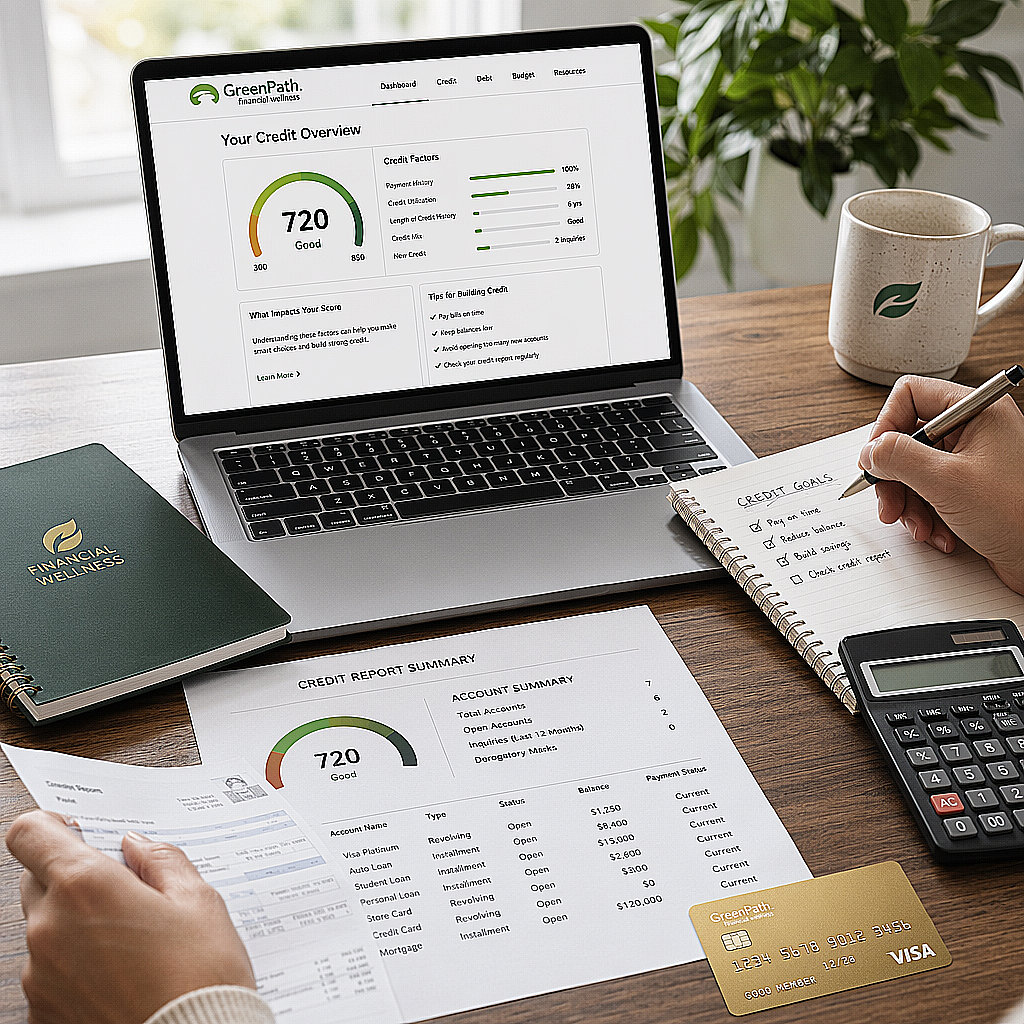
Your credit report is a detailed record of your borrowing history. It lists your loans, credit card accounts, payment history, and more. Lenders may use your report to see how reliably you’ve paid your debts in the past.
Credit Score
Your credit score is a three-digit number (often 300–850) summarizing what’s in your report. Higher scores generally mean you’ve shown reliable borrowing habits. Lenders often use your score to help decide whether to approve you for credit.
Common Credit Terms, Explained
The maximum amount you’re allowed to borrow on a credit account, like a credit card.
The cost you pay to borrow money, shown as a percent of the amount owed.
The smallest amount you need to pay each month to keep a credit account in good standing.
How much of your available credit you’re using, usually shown as a percent. Lower is typically better.
Your record of making payments on time; it’s a major factor in your credit score.
A “hard pull” on your credit when you apply for new credit; too many in a short time may lower your score.
Habits That May Affect Your Credit
- Paying bills on time, every time.
- Keeping credit card balances low compared to your credit limits.
- Avoiding applying for lots of new credit in a short period.
- Reviewing your credit report regularly for accuracy.
- Building a long, positive history with accounts over time.
Mistakes to Watch For
- Missing or making late payments.
- Using most or all of your available credit.
- Applying for many credit cards or loans at once.
- Ignoring your credit report (errors can happen!).
- Letting accounts go unpaid or default.
Helpful Reminders:
- This article is for general informational and educational purposes only.
- Credit can affect things like borrowing, renting, and more—so learning the basics is valuable.
- Everyone’s financial situation is unique; when in doubt, consult a qualified professional for advice about your circumstances.
Explore Related Topics
 Budgeting Basics
Learn practical steps for creating and using a personal budget.
Read More → Saving Basics
Simple ways to set money aside for both small and big future needs.
Read More → Debt Awareness
Get familiar with types of debt, payment strategies, and healthy approaches.
Read More → Financial Organization
Tips for managing bills, paperwork, and keeping your finances organized.
Read More →Important Disclaimer: This article is provided for educational purposes only and does not offer financial, legal, tax, or credit advice or services. Gran Financial LLC is not a financial advisor, lender, credit repair provider, or tax professional. Please consult qualified professionals for advice specific to your situation.
Keep Exploring & Learning
Your understanding of credit is a powerful tool—keep reading, ask questions, and build confidence one step at a time. Visit our blog and resource pages for more clear, practical guides to everyday finances.
Browse More Articles